
Remembering Doc
Memories with Dr. Bernard LaFayette Jr in his transition

Note: This article was originally appeared on Waging Nonviolence, and is published under a Creative Commons license.
Everyone lovingly called him “Doc.”
Today is my last morning waking up in Japan after an incredible 20-day trip through Taiwan and my homeland. This morning, I woke up to a flood of text messages telling me that Dr. Bernard LaFayette, who everyone lovingly called “Doc” had passed away.
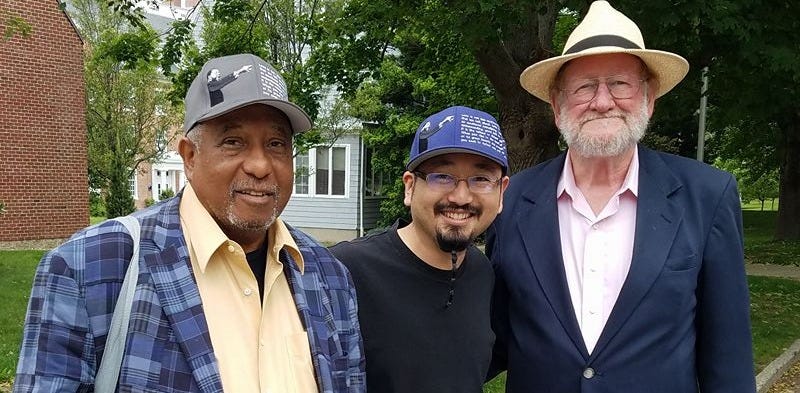
Doc, in addition to being one of the most important teachers I have ever had, was a legend of the civil rights era — the first organizer to go to Selma, Alabama, co-founder of the Student Nonviolent Coordinating Committee, or SNCC, national coordinator of the original Poor People’s Campaign — as well as the co-author of the Kingian Nonviolence Conflict Reconciliation training philosophy and author of his personal memoir, “In Peace and Freedom: My Journey in Selma.”
Being on the other side of the world, moving through long days of travel and family schedules, I thought I would not have much time to process it. But today, on our last day here, we decided to let our daughter nap at home instead of going out. Suddenly I found myself with a couple of quiet hours to myself. In the stillness, memories of Doc began flowing, and I felt the urge to sit and share a few stories about the man so many of us loved.
Like so many wise elders like Desmond Tutu or the Dalai Lama, Doc had a childlike quality to him. He was always joyful and playful, almost carrying an innocent, naïve presence despite the violence he had lived through, experienced, and fought against — having been beaten and arrested dozens of times and surviving an assassination attempt. He had an unwavering hopefulness about him, a lightness that somehow coexisted with the immense history he carried.
After my first ever Kingian Nonviolence training, I was so inspired that I called him on the phone. I told him right then and there: “this is what I want to do for the rest of my life.”
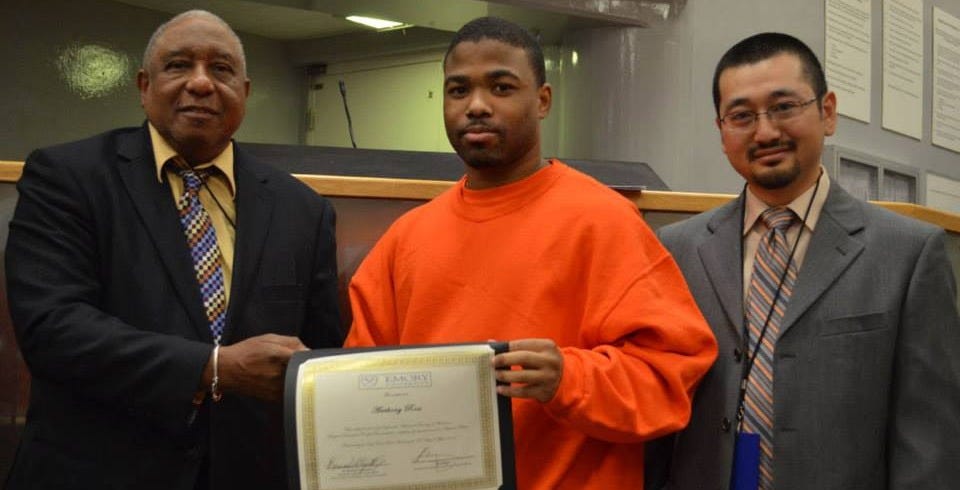
A few months later, I found myself attending the Kingian Nonviolence summer institute in Rhode Island, studying to become a certified trainer. This was where I first met Doc in person. Now, almost 17 years later, it is still what I am doing — pursuing a deeper understanding of the word nonviolence and what it means to become a better practitioner of it.
Each evening during the summer institute, he gave a lecture where I felt like I was trying to write down every word that came out of his mouth. Not only did that experience deeply ground me in a principled approach to nonviolence, but I was also blown away by how strategic he, and the leaders of the civil rights movement, were. It felt like all of the organizing I had done up to that point was being put to shame.
I remember him telling me that he and his colleagues would often plan to engage in civil disobedience on Friday afternoons, so that by the time they were getting booked in jail, the courts would be closed and the city would have to keep them over the weekend. This put additional pressure on them, since they would now have to house and feed dozens of students over the weekend.
He shared that when they held marches and they did not have a large number of participants, they would march two-by-two with a little bit of space between each pair to make the march look longer than it actually was.
I was clinging to every word, realizing that this tradition carried a depth of discipline and strategy that I had barely begun to understand.
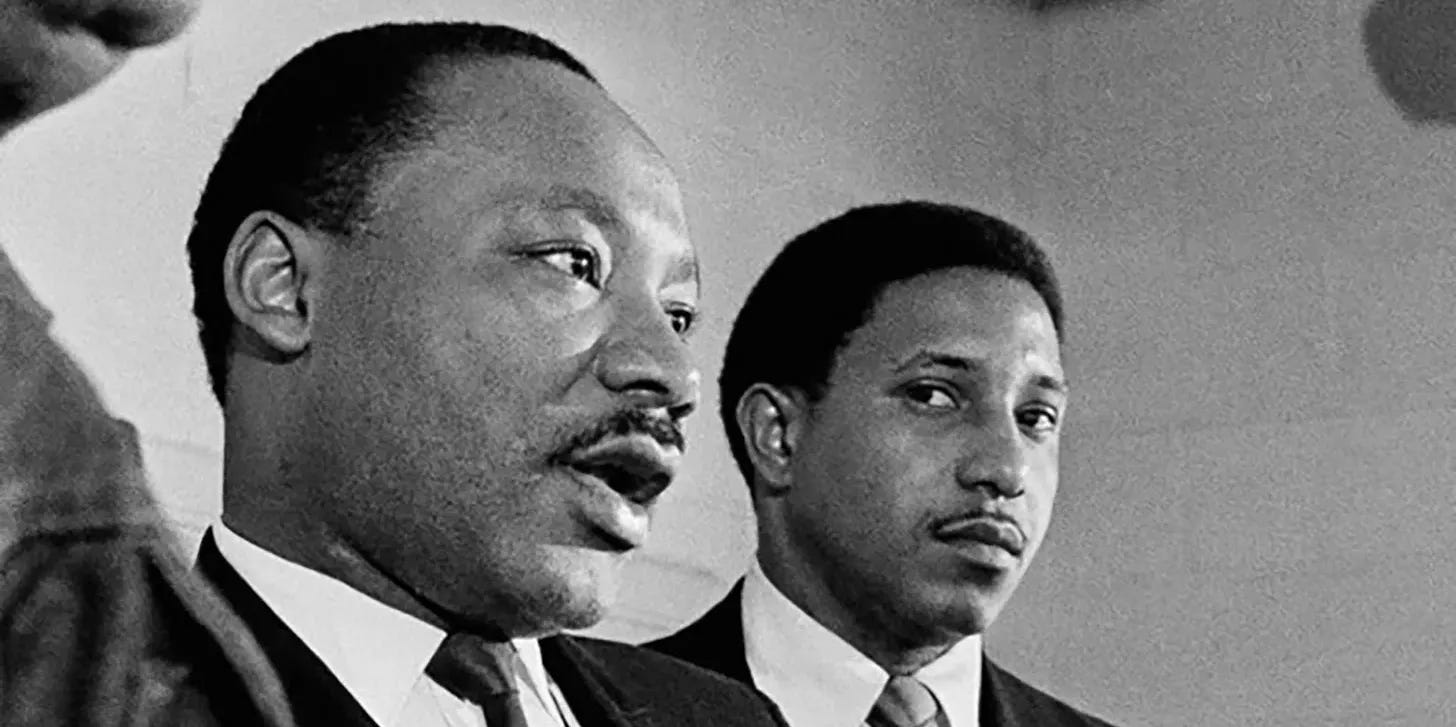
It was such an honor to hear his stories. Doc loved to tell stories. Once, he casually told us about eating ribs and playing pool with Dr. King — “Martin” he called him. Stories that collapsed the distance between the historical figures we read about in books and the real human relationships that shaped the movement.
I also had the honor of co-facilitating multiple workshops with him, including one in Santa Cruz, California. After the first day of that training, I found myself in his hotel room listening to stories late into the night. At some point, it was getting pretty late and his wife Kate had fallen asleep on his shoulders. I was also getting tired, so I remember looking over at my friends and saying something like, “It looks like Kate’s tired, so maybe we should get going.”
Doc immediately stopped me and said, “Oh no, it’s fine, it’s fine…” and just kept talking. For hours.
Elders can talk forever. But I loved that about him.
It was also sweet to witness his relationship with Kate, herself a civil rights icon. After all those years together, he still opened the door for her every time. They always held hands. She would tease him about the sweets he’s not supposed to be eating. There was such tenderness between them. It was a quiet, beautiful expression of the love that sustained them through a lifetime of struggle.
Many of his stories stayed with me, but one in particular always moved me deeply. On his first day organizing in Selma, he was beaten bloody. His white T-shirt was stained with blood, and he wore that same shirt for days afterward so people in Selma could see how serious his commitment was.
I remember him telling me of practicing the teachings of Rev. James Lawson, the original trainer of the movement, and trying to look compassionately into the eyes of his assailant even as he was being beaten.
That kind of courage is hard to comprehend.
I had the honor of being with him in Selma once. Doc was the first organizer from SNCC who wanted to try to organize the city where, as he always liked to remind us, “the white folks were too mean and the Black folks were too scared.”
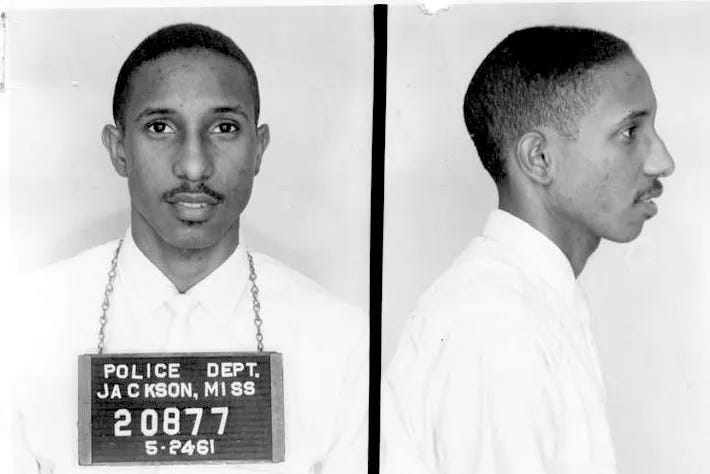
Despite the fact that Selma was considered a “no-go zone” by national organizers, Doc went and set the stage for what would become Bloody Sunday and eventually the Voting Rights Act. Walking around Selma with him, I felt like I was in the presence of living history (people often referred to him as a national treasure). Every time we walked into a restaurant, people would recognize him and stand up to greet him. You could feel the weight and gravity of the history he carried with him.
And yet he never seemed heavy with it.
I also remember a meeting once with the executive committee of an organization I was part of. The committee, made up mostly of people my age, had gotten into a conflict. Doc happened to be sitting in on the meeting. He didn’t interrupt or intervene. He just sat there, watching and smiling quietly as the heated conversation unfolded.
At the end, we asked him if he had any thoughts.
He said that watching us reminded him of how he and his colleagues in the civil rights movement used to argue with each other all the time. He told us that movements spend about 40 percent of their time in conflict with each other, and that we shouldn’t worry about it too much.
It was grounding hear that sort of perspective from someone who’d lived through it all. Even the elders of the civil rights movement fought with each other. Conflict wasn’t a sign that something had gone wrong, it was simply part of the work of being human together while trying to change the world.
Doc carried history in his bones. He had lived through brutality and transformation, through moments that reshaped the course of a nation. And yet what I remember most about him is not just the history, it’s the spirit.
His joy.
His stories.
His hope.
His undying commitment to his golf game. For a period of his life, he refused to travel for workshops and speaking engagements unless he could fit in a round of golf. The only time I ever played a full round of golf was with him. And, to be completely honest and candid here, his game probably should have been better than it was given how much he played. But he still kept at it, with that ever-present smile.
This morning in Japan, as messages kept arriving on my phone, I felt the loss of someone who shaped my life in ways I am still discovering. I am still clinging to the wisdom that came from listening to Doc. Sitting here in the quiet while my daughter naps in the next room, I am reminded that the work Doc gave his life to was never just about one generation.
It moves from hand to hand, story to story, teacher to student.
Doc helped pass that torch to so many of us. And now it is our responsibility to carry it forward — to keep studying, practicing, organizing and striving toward the Beloved Community he devoted his life to building.
One day, when my daughter is older, I hope I will be able to tell her stories about a man everyone called Doc. About his courage, his laughter, his hope, and the way he believed so deeply in the power of nonviolence.
What a gift it was to know and learn from him.
PS: I also want to quickly mention a few more people. In Japan, I always stay at Tamura-san’s home. She was our next-door neighbor in Tokyo where I grew up, and is closer to my family than my actual family in Japan. When we came home last night from our day of adventuring, she was not there to greet us because her older sister had just passed away.
I didn’t know her well, but Tamura-san (who my daughter began to call “Ta-san”) told me that I had met her a few times while attending festivals in my early years.
About a week ago, just as I was arriving in Japan, I received word that another teacher and revolutionary, Venerable Pannavati had also passed away. I did not know her well, but I did have the honor of being in her presence and receiving her wisdom several times, and always felt connected to her commitment to a dharma that never left behind those who were oppressed and marginalized.
We also, coincidently, got to be in Japan during my father’s death anniversary. It had been decades since I was able to visit our family grave on his actual anniversary, and it felt so special to be with him and all of the Haga ancestors along with my daughter, partner and a close friend.
Perhaps the biggest gift during this trip has been seeing my daughter continuing to grow, learning to appreciate the Taiwanese and Japanese food my partner and I grew up eating, and seeing her bond with family and cultivating a tender relationship with those that we grew up loving.
And so the love continues. Elders pass, children grow. We breath in, we breath out.
Breathing in, we honor the energy of growth, expansion and learning.
Breathing out, we honor the energy of decay, contraction and passing on those lessons so future generations can continue to thrive and create beauty.
this is beautiful Kazu - a gift, in the joy, hope, memories and wisdom it contains! i feel really grateful and humbled to get to learn a bit about Doc during these times, when I need that reminder of joy and hope to continue good work. thank you!
Dearest Kazu, thank you for this wise and beautiful reflection. Of course you were the first person i thought of when i heard about Doc's passing yesterday. Sending much love to you and all who have been touched by his life (which probably includes most of us, in the US at least, whether we know it or not). Deep bows of gratitude to him as he joins the Ancestors. I imagine the Movement folk are having quite a reunion... and that they are in league with us as we carry on the vision and the struggle they championed. /|\